What is the Early Years Foundation Stage (EYFS)?
The Statutory Framework for the Early Years Foundation Stage (2021) states that ‘Every child deserves the best possible start in life and the support that enables them to fulfil their potential’…
The early years foundation stage (EYFS) sets standards for the learning, development and care of your child from birth to 5 years old. All schools and Ofsted-registered early years providers must follow the EYFS, including childminders, preschools, nurseries and school reception classes.
Here at St. John’s, we take pride in what we offer our children during what is a crucial part of their lifelong development. Every child is unique and is entitled to fulfil their own learning journey. We support these journeys by integrating both education and care within the classroom, supporting children with SEND and promoting equality. We have an inclusive, warm and loving environment.
The EYFS focuses on seven Areas of Learning: three Prime Areas (Communication & Language, Physical Development, Personal, Social & Emotional Development) that build foundational skills, and four Specific Areas (Literacy, Maths, Understanding the World, Expressive Arts & Design) that grow from the primes, ensuring holistic growth and school readiness.
The seven Areas of Learning & Development consist of:
Prime Areas (Foundational):
Communication and Language: Listening, attention, understanding, and speaking.
Physical Development: Moving and handling, health, and self-care.
Personal, Social and Emotional Development (PSED): Self-awareness, managing feelings, making relationships, and self-regulation.
Specific Areas (Grow from Primes):
Literacy: Reading and writing.
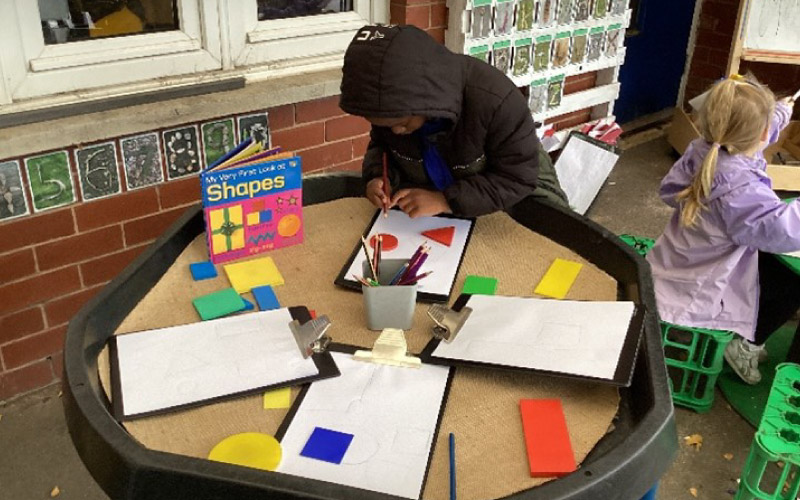
Mathematics: Counting, numbers, shapes, spaces, and measures.
Understanding the World: People, communities, the world, and technology.
Expressive Arts and Design: Exploring and using media, materials, and ideas.
At St. John’s we use Development Matters alongside the Early Years Statutory Framework. Development Matters demonstrates how the four themes of the EYFS Framework and the principles that inform them work together to support the development of babies, toddlers and young children within the context of the EYFS framework. The document also illustrates how the ‘Characteristics of Effective Learning’ may be supported and extended by adults as well as how they underpin the ‘Prime’ and ‘Specific’ areas of learning and development. Development Matters supports our practitioners when planning, observing and assessing and also provides guidance when making 'best-fit judgements' on the development of each individual child, meaning support can quickly be put into place.
Development Matters is the UK government's non-statutory guidance for early years practitioners, showing how children learn and develop, this helps us to plan a rich curriculum through play, modelling, and guided learning. More information can be found below:
Development Matters:
Department of Education Development Matters Report
EYFS Statutory Framework:
Early Years Foundation Stage Statutory Framework Report
Our curriculum is designed to provide a broad and balanced way of learning, which adapts to the children’s social, emotional, physical, intellectual, moral and cultural development. Our children do this within a safe, secure and stimulating environment.
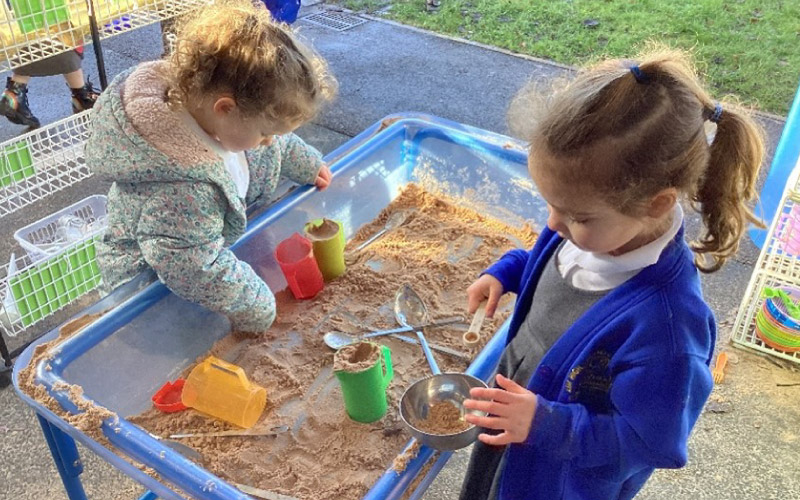
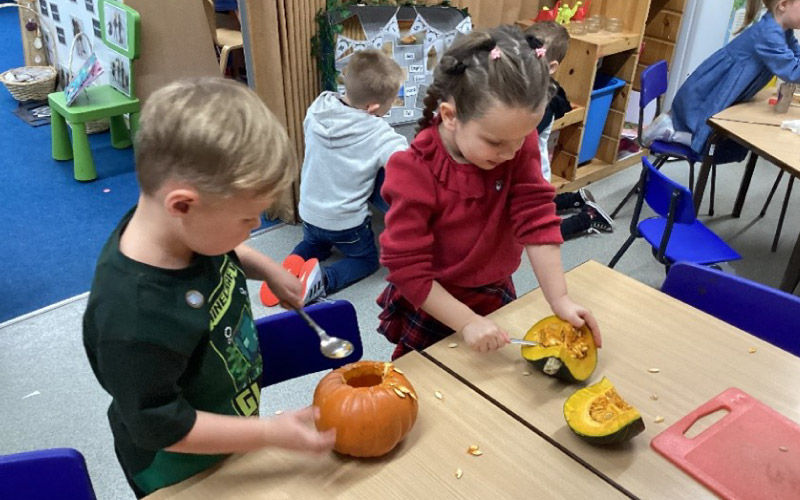
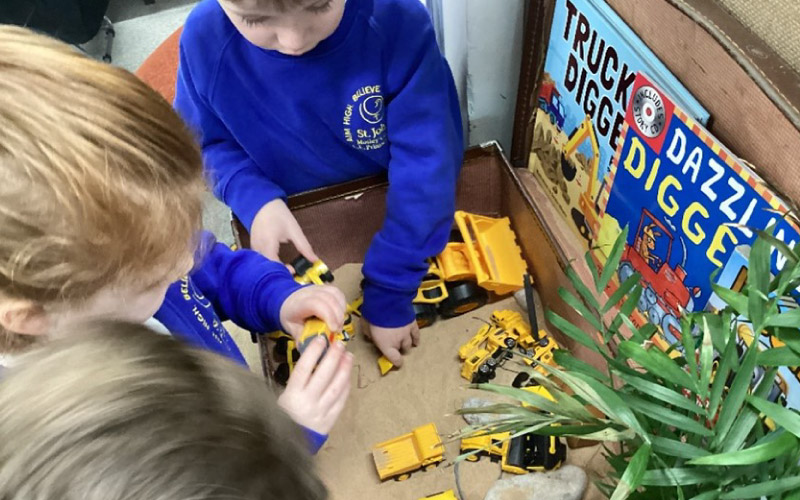
In the EYFS, our themes compliment each child’s own experiences and we plan activities and learning experiences to enable each child to learn and develop their own skills, attitudes and understanding, both adult-guided and independent.
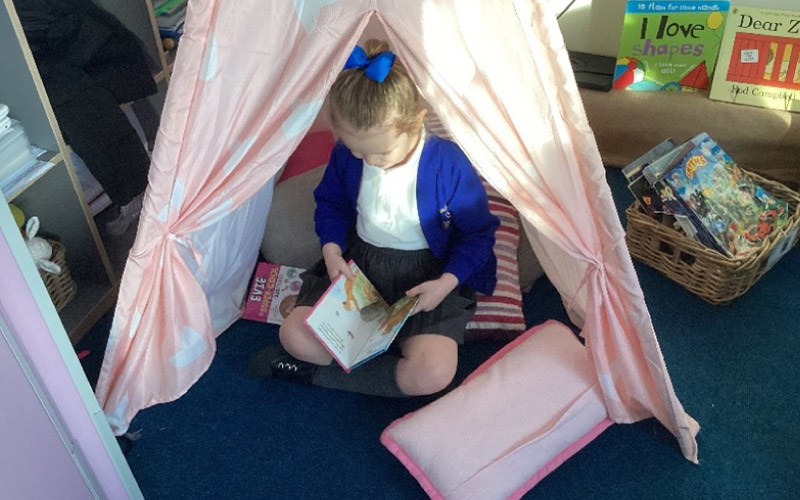
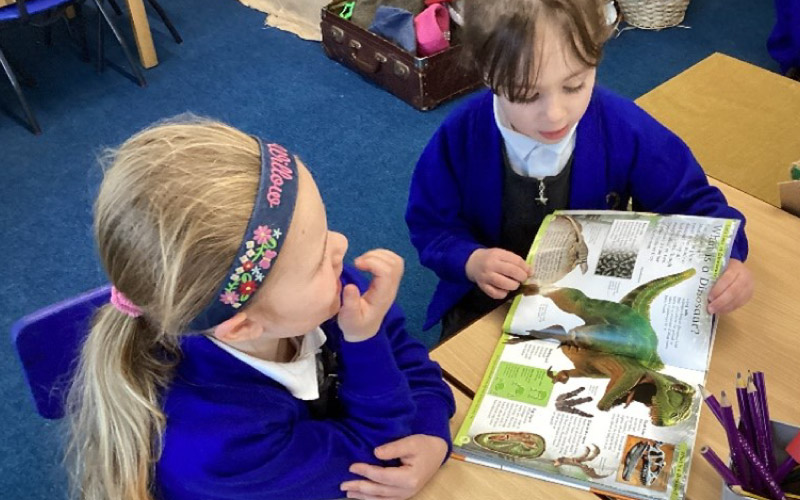
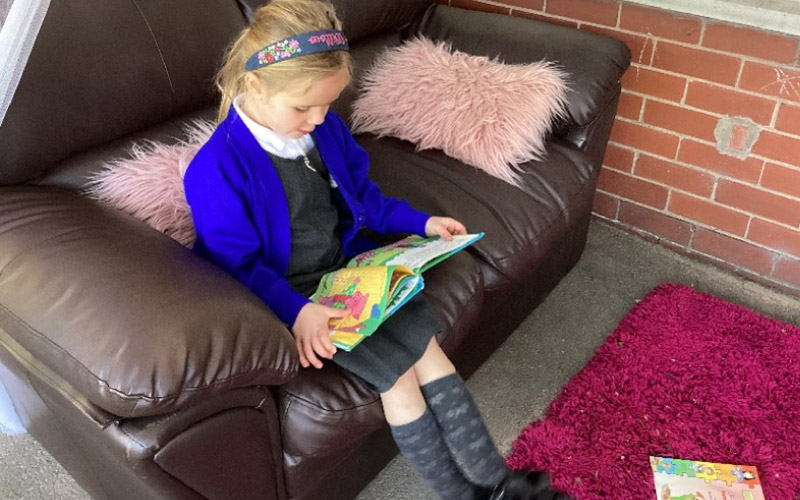
Quality texts are identified throughout the curriculum and we always provide the children with access to high-quality books. This is a priority throughout all of our provision.
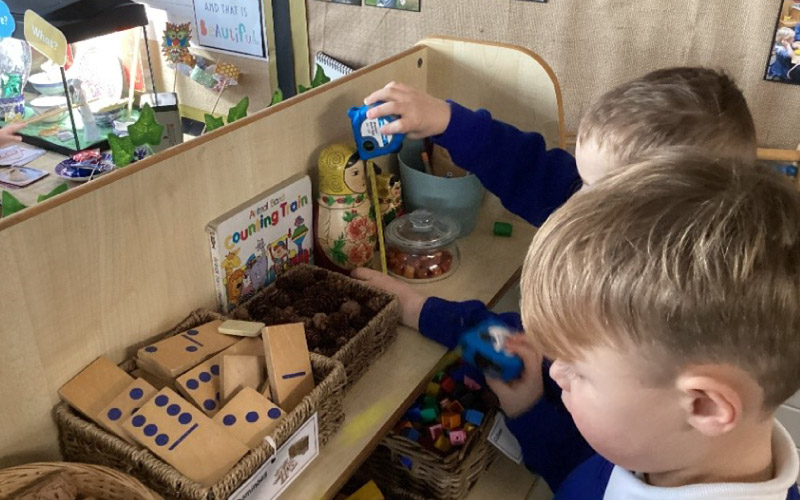
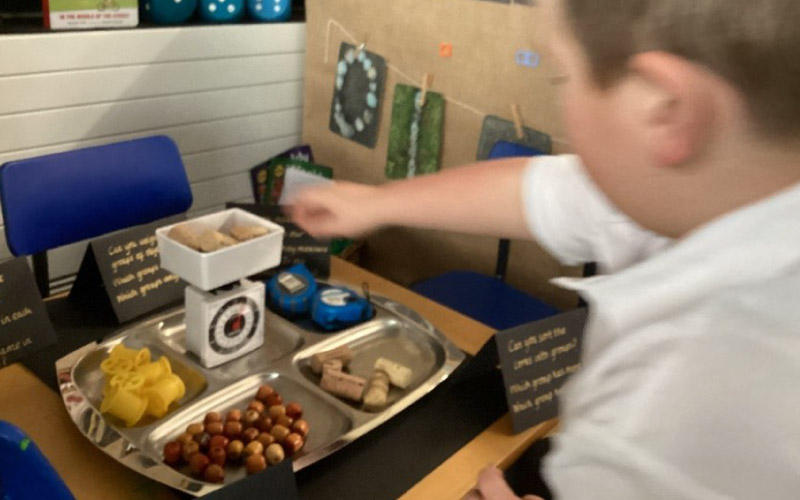
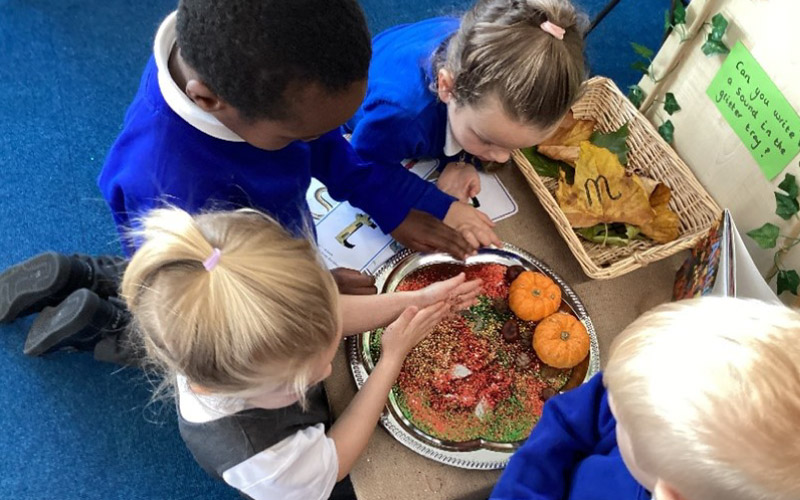
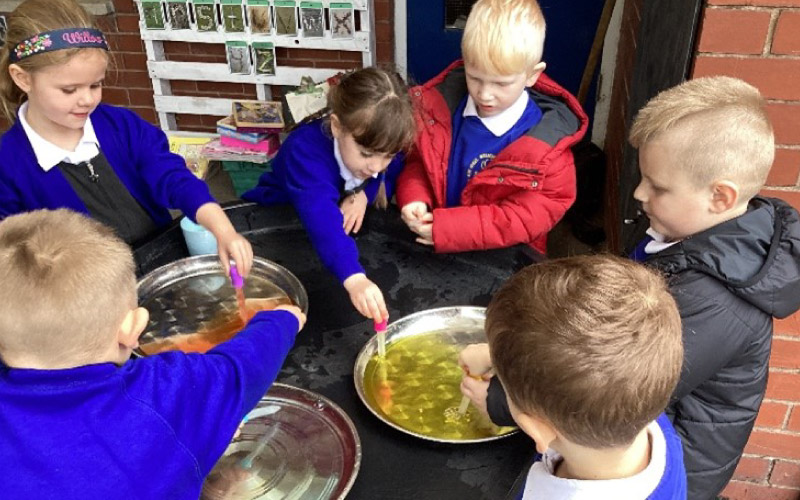
Mark making, making conversation and mathematics are at the heart of the teaching and learning that takes place in the EYFS and there is a sharp focus on children’s acquisition of a wide vocabulary. We recognise that the environment is the third teacher and each area within the classroom provides children with the opportunity to problem solve, wonder, interact, explore and observe. Clear challenges across the curriculum allow children to be independent with their own learning, preparing them for Key Stage One and beyond.
Each half term, the EYFS curriculum is guided by an open-ended learning question or statement linked to a few key texts. Teachers plan for exciting learning opportunities that provide our children with experiences they may never have had before. Children are encouraged to lead their own learning and teacher’s use their knowledge of each individual child to ensure children’s interests and needs are catered for in order for them to progress in all areas of the EYFS and to develop a life-long love of learning.
We want our children to have the very best start in life, but there are some things that can be done at home to prepare each child for their time in Reception. The following website has some useful information to support both children and parents, with links to further guidance and advice on a range of topics:
Starting Reception
Below are some of the things that children might learn to do, to help them to have the very best start to Reception. Please note, every child is different and will therefore learn to do some things before/easier than others. If you have any concerns, or require support, then come and speak to us and we will do our very best to help and give advice.
Getting ready for Reception:
Growing independence
Taking care of themselves
Putting on/taking off their coat and shoes
Using the toilet and washing their hands
Getting dressed with little help, e.g. after using the toilet or doing PE
Using cutlery (e.g. fork and spoon, chopsticks) and drinking from an open cup
Spending time away from you, learning they can be looked after by caring adults
Play, creativity and curiosity
Taking part in imaginative play (e.g. role play)
Drawing, painting, colouring and sticking
Sharing story books with caregivers, looking at pictures and talking about the characters
Exploring the world around them (e.g. looking closely at the natural world or playing safely with objects at home)
How to apply:
Apply for a place at St. John’s here